
 Robert Silverberg is one of the world’s most prolific and beloved science fiction authors. He has attended every Hugo award ceremony since 1953. We believe this to be true, since that’s where we met him in 2018. We were bowled over with fannish delight when he came by the Pulp table at WorldCon not once but twice to peruse our magazine.
‘The Pope of the Chimps’ was originally published in Perpetual Light (Warner Books, 1982) and would probably have won a Nebula if it had come out in a large circulation magazine. We were delighted to give it an afterlife in Pulp Literature Issue 22, and are pleased to share it again here in this excerpt.
The Pope of the Chimps
Robert Silverberg
Early last month Vendelmans and I were alone with the chimps in the compound when suddenly he said, “I’m going to faint.” It was a sizzling May morning, but Vendelmans had never shown any sign of noticing unusual heat, let alone suffering from it. I was busy talking to Leo and Mimsy and Mimsy’s daughter Muffin, and I registered Vendelmans’s remark without doing anything about it. When you’re intensely into talking by sign language, as we are in the project, you sometimes tend not to pay a lot of attention to spoken words.
But then Leo began to sign the trouble sign at me, and I turned around and saw Vendelmans down on his knees in the grass, white-faced, gasping, covered with sweat. A few of the chimpanzees who aren’t as sensitive to humans as Leo is thought it was a game and began to pantomime him, knuckles to the ground and bodies going limp. “Sick — ” Vendelmans said. “Feel — terrible — ”
I called for help, and Gonzo took his left arm and Kong took his right and somehow, big as he was, we managed to get him out of the compound and up the hill to headquarters. By then he was complaining about sharp pains in his back and under his arms, and I realized that it wasn’t just heat prostration. Within a week the diagnosis was in.
Leukemia.
They put him on chemotherapy and hormones, and after ten days he was back with the project, looking cocky. “They’ve stabilized it,” he told everyone. “It’s in remission and I might have ten or twenty years left, or even more. I’m going to carry on with my work.”
But he was gaunt and pale, with a tremor in his hands, and it was a frightful thing to have him among us. He might have been fooling himself, though I doubted it, but he wasn’t fooling any of us: to us he was a memento mori, a walking death’s-head-and-crossbones. That laymen think scientists are any more casual about such things than anyone else is something I blame Hollywood for. It is not easy to go about your daily work with a dying man at your side — or a dying man’s wife, for Judy Vendelmans showed in her frightened eyes all the grief that Hal Vendelmans himself was repressing. She was going to lose a beloved husband unexpectedly soon and she hadn’t had time to adjust to it and her pain was impossible to ignore. Besides, the nature of Vendelmans’s dyingness was particularly unsettling because he had been so big and robust and outgoing, a true Rabelaisian figure, and somehow between one moment and the next he was transformed into a wraith. “The finger of God,” Dave Yost said. “A quick flick of Zeus’s pinkie and Hal shrivels like cellophane in a fireplace.” Vendelmans was not yet forty.
The chimps suspected something, too.
Some of them, such as Leo and Ramona, are fifth-generation signers, bred for alpha intelligence, and they pick up subtleties and nuances very well. “Almost human,” visitors like to say of them. We dislike that tag, because the important thing about chimpanzees is that they aren’t human, that they are an alien intelligent species; but yet I know what people mean. The brightest of the chimps saw right away that something was amiss with Vendelmans, and started making odd remarks. “Big one rotten banana,” said Ramona to Mimsy while I was nearby. “He getting empty,” Leo said to me as Vendelmans stumbled past us. Chimp metaphors never cease to amaze me. And Gonzo asked him outright: “You go away soon?”
“Go away” is not the chimp euphemism for death. So far as our animals know, no human being has ever died. Chimps die. Human beings go away. We have kept things on that basis from the beginning, not intentionally at first, but such arrangements have a way of institutionalizing themselves. The first member of the group to die was Roger Nixon, in an automobile accident in the early years of the project long before my time here, and apparently no one wanted to confuse or disturb the animals by explaining what had happened to him, so no explanations were offered. My second or third year here, Tim Lippinger was killed in a ski-lift failure, and again it seemed easier not to go into details with them. And by the time of Will Bechstein’s death in that helicopter crack-up four years ago the policy was explicit: we chose not to regard his disappearance from the group as death, but mere going away, as if he had only retired. The chimps do understand death, of course. They may even equate it with going away, as Gonzo’s question suggests. But if they do, they surely see human death as something quite different from chimpanzee death — a translation to another state of being, an ascent on a chariot of fire. Yost believes that they have no comprehension of human death at all, that they think we are immortal, that they think we are gods.
To find out what happens next, pick up your copy of Issue 22, Spring 2019 here!
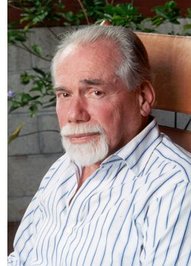 Robert Silverberg has been a professional writer since 1955, widely known for his science fiction and fantasy stories. He is a many-time winner of the Hugo and Nebula awards, was named to the Science Fiction Hall of Fame in 1999, and in 2004 was designated as a Grand Master by the Science Fiction Writers of America. His books and stories have been translated into forty languages. Aside from the Majipoor Chronicles, he has published dozens of acclaimed short stories.
Discover more from PULP Literature
Subscribe to get the latest posts sent to your email.
Leave a Reply